delete

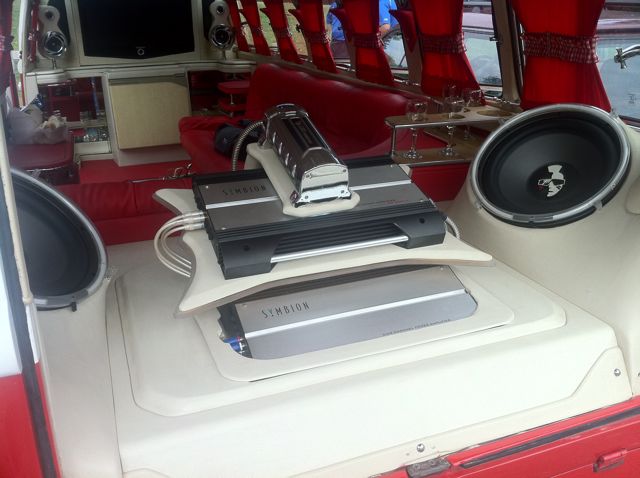
I think this stretch Volkswagen Kombi is the world’s coolest car.

Img_2448Img_2475Img_2436Img_2466Img_2477Img_2481Img_2483Img_2485

It was a ‘guest’ at Jessica and Jamie’s wedding last weekend – and a more suitable limo for Byron Bay couldn’t be imagined.

The owner, Koshi, spent two years working on this 1950 Samba VW. He split the original in half, inserting the middle of another Kombi to make the stretch. All the parts are original, including the split windscreen. The massive sound system is new.

Koshi also owns a sunglasses and ugg boot shop in Byron, (as you do). Look him up when your in town, before he takes his young family around Australia next year.

You can hire the ‘luvmachine‘ (ouch) for your next big night out through Koshi’s online booking service.


Add a comment
delete

Remind yourself of the key events of the wonderful 1980s with these ‘forgotten’ video games.

From collegehumor.com

What I Learnt On 18th March in other years

View or Add Comment

delete

St_lola

Did you start today with a pint of green guinness?

If you did, you may be surprised to know that you are participating in an Australian tradition dating back 200 years! (if you didn’t – why not?)

In 1810, Governor Lachlan Macquarie declared St Patrick’s Day, March 17th, as an official day of celebration. Australia has been celebrating that day ever since.

The Irish have had a very significant impact on Australian history. There were, of course, Irish convicts in the First Fleet, and Irish people remained enormously over-represented throughout the history of transportation.

Many of the Irish convicts and free settlers were political activists, and people of Irish heritage have played a key role in Australian politics.They were keen proponents of a distinct Australian identity, rather than British.  For 26 of the fist 50 years of federation, Australia’s Prime Minister had an Irish background. At the time of the Second World War, about one third of Australians identified as being of Irish heritage.

Mannix_1920parade_480w

The St Patrick’s Day parade in Sydney is the second largest in the world, after New York. This year it will this year take place next Sunday. Sixty floats participate, one of which will be made up of residents of St Johns College, Sydney University. This is a tradition going back to before I was a resident there (which is a long time)

Luckily, on St Patrick’s Day one gets official dispensation from one’s Lenten fast. (ie you can have whatever you gave up for Lent)

Of course, we would start the day with a green guinness or two – at the White Horse Hotel, Parramatta Rd – before marching in our academic gowns to the parade. Freshers would have had weeks of choir practice during which Irish rebel songs and homesick laments were drummed into us by the senior choir master. So, having drunk a socially inappropriate number of beers, and armed with an arsenal of politically inappropriate songs, we would serenade the Irish community of Sydney.

“Fight Mickey Fight, and don’t you be afraid, tomorrow you’ll be marching in the Sinn Fein parade…..”

“If you ever go across the sea to Ireland, then maybe at the closing of your day, you will sit and watch the moon rise over Claddagh, or see the sun go down on Galway Bay”

“It seems like only yesterday I sailed from out of Cork, I wanderer from Erin’s Isle I landed in New York”

“Its a long way to Tipperary, its a long way to go”

“What do we want – England out of Ireland, When do we want it – Now”

“Oh my name is MacNamara, I’m the leader of the band”

“In Dublin’s fair city, where the girls are so pretty, I first set my eyes on sweet Molly Malone”

And every pretty policewoman or Irish colleen we came across would be serenaded by 100 kneeling young men with

“You come on like a dream, Peaches and Cream, Lips like Strawberry Wine – You’re Sixteen, You’re Beautiful and you’re mine”.

It shows what good sports the Irish are that they let St Johns continue to participate in the parade. 

Stjohnscollege


Johns goes all Hogwarts for the St Patrick’s Day Ball

An exhibition about the Irish in Australia called ‘Not Just Ned’ opens today at the National Museum of Australia.


Happy St Patricks Day (especailly to my Father-In-Law, Paddy Houlahan, who had a guinness or two today – to be sure, to be sure)


What I Learnt On 17th March in other years

17th March 2012 Danger 5Danger 5
View or Add Comment
delete
Media_httpthisisindex_efamw

Add a comment
delete

The Japanese spirit of ‘falling forwards’ has inspired this blog from Day 1, and the philosophy of Kaizen informs our efforts in Practice Improvement.

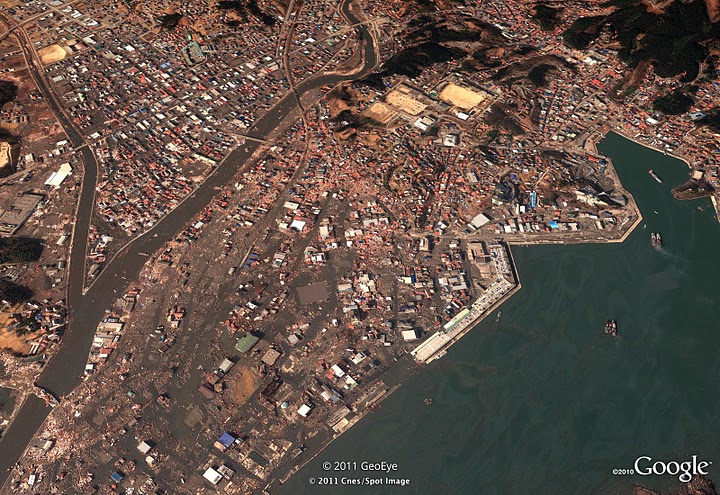
The resilience and resourcefulness of the Japanese people is remarkable – but how would you start to recover from the destruction we have seen this week.

The enormity of the task is made clear in a slideshow of ‘before and after’ shots Google has posted to Picasso.


Japan2Japan1Japan3Japan4Japan5Japan6Japan7

This eye witness video on Gizomdo shows how quickly a stream flowing down a street changed into an ocean flowing through a town.

Google Earth have set up special resources that demonstrate the extent of the destruction


View Larger Map


With 500,000 people now homeless, our thoughts and prayers go out to the Japanese people.

http://redcross.org.au/japan2011.htm


What I Learnt On 15th March in other years

15th March 2012 An Apple a Day....An Apple a Day….
Add a comment
delete

Inauguration_web

On the weekend we attended a birthday party where there were some excellent speeches.

It is normal to be anxious before giving a talk or making a speech. Using this nervous energy is the key to being natural and engaging. At a 50th birthday party at the weekend we heard some excellent speeches.

It is a great pity that we miss out on the wisdom of many people because their anxiety prevents them from sharing it before a crowd.

The most important part of public speaking is being prepared. I’m in awe of people who can get up before a crowd and speak completely off the cuff. Some politicans I’ve seen are excellent at this (Tony Abbott is very good, and I suspect Julia Gillard is also). School teachers are also excellent at speaking without much notice. For us lesser mortals, the key to giving a good speech is preparation.

At our workshops, I’ve seen some professional speakers give wonderfully engaging, funny and informative talks – and they appear to be making it up as they go along. When we get them back at subsequent workshops, they give the same ‘impromptu’ talk – word for word, pause for pause, gesture for gesture. Preparation.

Garr Reynolds, our friend from Presentation Zen, has a post this week on ‘Dealing with Public Speaking Nerves‘. He includes five tips from Les Posen, a Melbourne based psychologist who has his own blog called ‘Presentation Magic‘. 

Les’s tip are:

1. Chunking and exposure.

Break your talk into small parts.


2. Rehearsal.

Visualise yourself wowing the crowd as you practice


3. Self-talk.

“I can do this”.


4. Arousal control via diaphragmatic breathing.

Slow, deep breaths.


5. Deliberate practice.

Practice the beginning, ending and other key parts of the talk.

You can read more about Les’s tips at Presentation Zen

I look forward to seeing and hearing your next ‘tour de force’.

PS. I suspect some of the nerves of the speakers at the birthday party we attended were quelled using a very traditional liquid remedy (or two). Moderation is the key to this particular cure.

What I Learnt On 14th March in other years

Add a comment
delete

Internet access on the go using your iPhone as a modem.

Apple released an upgrade to the iPhone operating system this week (iOS 4.3), which makes it easy to create a ‘Personal Hotspot’ using your iPhone.

This means that you can use your iPhone to give your laptop or iPad access to the internet. This is of particular advantage if you are using the non-3G enabled iPad (Robyn take note).

It is easy to activate  ‘Personal Hotspot’.

Open ‘Settings’ on your iPhone

Select ‘Personal Hot Spot’

Hotspot

You will see that a random password has been supplied. Change it if you like.

Slide the switch to turn Personal Hot Spot On.

That’s it.

If you have an iPhone 4, your phone will be discoverable as one of the WiFi networks available to your laptop or iPad(on the Mac, this is from the Airport menu). Up to 3 devices can network via WiFi.

You will also be able to use the HotSpot via a USB connection or Bluetooth – so you could provide internet access to 5 devices altogether.

(If you have an iPhone 3 or 3GS, only the HotSpot or Bluetooth options are available – the WiFi option does not work on these older models)

Make sure that you have a good data plan before using your iPhone as a hot spot. Excess data charges can be vey high – especially overseas!


What I Learnt On 13th March in other years

Add a comment

delete

Seismograph

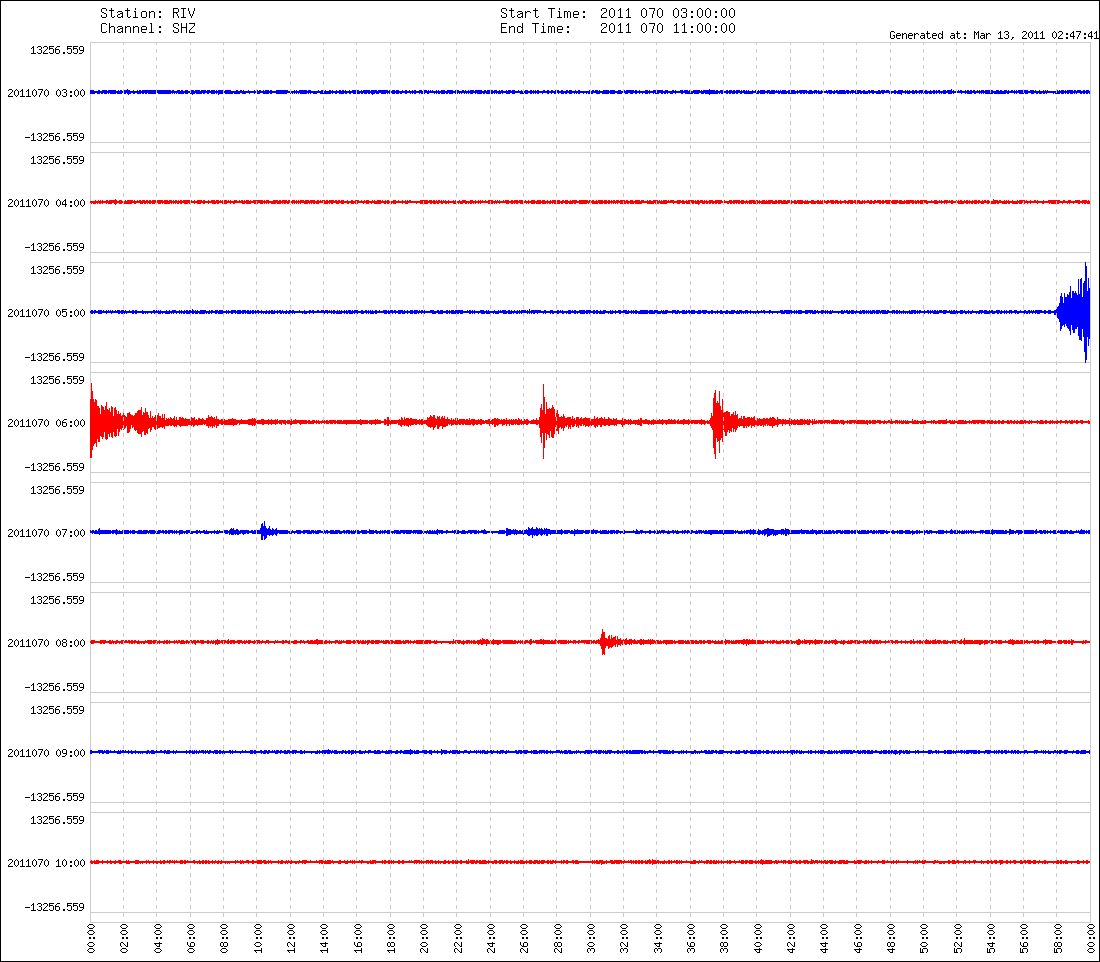
Seismograph at Riverview Observatory, Sydney.

The Earthquake this weekend in Japan measured 8.9 on the Richter Scale. Christchurch’s earthquake on Feb 21st scored 6.3. Yet they say Japan’s was 1000 times stronger than New Zealand’s. How does that work?

The magnitude of an earthquake is measured using a scale developed by Charles Richter in 1934.  It is based on the largest earth movement detected during a quake on a seismograph. The range of possible wave amplitudes is vast – from tiny movements that humans won’t notice to the enormous tremors we have seen in Japan and NZ.

This is the seismograph recording taken from the Riverview Observatory in Syndey on March 11th this week. You can see the Honshu earthquake hitting at 5.46 (UTC)

Ssswww2

Because of the large range of possible readings, the Richter Scale is logarithmic. This means that a quake that is one unit bigger than another on the scale actually causes 10 times more movement.  A quake measuring 9 causes ten times bigger movement than a quake measuring 8, one hundred times more than a quake measuring 7, and a thousand times more than a quake measuring 6.

This table, reproduced from http://www.geo.mtu.edu/UPSeis/magnitude.html, shows how earthquakes are graded according to this scale.

Earthquake Magnitude Scale

Magnitude Earthquake Effects Estimated Number
Each Year
2.5 or less Usually not felt, but can be recorded by seismograph. 900,000
2.5 to 5.4 Often felt, but only causes minor damage. 30,000
5.5 to 6.0 Slight damage to buildings and other structures. 500
6.1 to 6.9 May cause a lot of damage in very populated areas. 100
7.0 to 7.9 Major earthquake. Serious damage. 20
8.0 or greater Great earthquake. Can totally destroy communities near the epicenter. One every 5 to 10 years

So the Richter Scale measures the amount of shaking movement an earthquake causes. However, the actual destructive power of an earthquake (it’s seismic power) scales to a higher factor against the amount of movement. So, a difference of one on the Richter Scale means 10 times the amount of shake but 30 times the destructive power. A difference on the Richter Sale of 2 means 100 times more movement but 1000 times more destructive power. Hence the relationship quoted in the initial text above. The Christchurch earthquake had 42 Kilotons of energy – the Japanese earthquake 336 Megatons!

The amount of damage done by a quake to a city also depends on how close the epicenter of the quake is to the city centre, how deep the quake is, and on the nature of the buildings in the city.

The earthquake in Christchurch was only 6km from the city center, at a depth pf 5km. The Japanese earthquake was 130km from Sendai (in the Pacific Ocean) at a depth of 24km. (most of the destruction has been caused by the ensuing tsunamai).

Earth tremors occur every 5 minutes in Japan, and there are 2000 quakes a year that can be felt by people. Because of the risk, traditional houses use paper architecture, and there are earthquake instruction signs in every building. This all seemed funny when we were there – but very sensible now.

On the US Geological Survery site you can compare detailed measurements of the Japanese earthquake on March 11th and of the Christchurch quake on Feb 21st

The recent Japanese earthquake was one of the largest ever recorded. The Indian Ocean earthquake in 2004 (which caused the devastating Tsunamai_ measured 9.3, and the largest earthquake ever recorded was the Valdivia earthquake in Chile in 1960, measuring 9.5.

It is somewhat sobering to view all the earthquakes happenning around the world each day. There have been 507 earthquakes in the last week, as shown on the map below. You can check the live report here.

World_moll


Add a comment
.

Subscribe To WILT

Sign up to our mailing list and receive a once daily dose of What I Learnt Today in your email inbox.

This is the best way to keep up with WILT.

Cheers,

Tony Lembke

You have successfully subscribed to WILT. Thanks.