delete

http://www.newscientist.com/blogs/nstv/2011/01/malaria-caught-breaking-and-en…

Each year there are 250 million cases of Malaria in tropical and subtropical parts of the world. Between 1 and 2 million of these cases are fatal. It is in the Top 10 causes of death in low income countries.
http://www.who.int/mediacentre/factsheets/fs310.pdf

Malaria is caused by the parasite Plasmodium, which is carried by the female Anopheles mosquito. This mosquito feeds at night. (Dengue Fever is spread by the Aedes mosquito which feeds in the daytime.

Each year, there are 30000 cases of malaria in people who are travelling to malaria-endemic areas. 5% of these cases are fatal.
http://www.australianprescriber.com/magazine/25/3/66/9/

The Malaria Atlas Project maps the prevelance of the Anophlese mosquito.
http://www.map.ox.ac.uk/

The parasite is transmitted to the Anopheles mosquito when it feeds from the blood of an infected person, It transfers to the salivary glands of the mosquito, from where it is easily transmitted to a new host when the mosquito has another feed. Within minutes of gaining entry to a new host, the parasite invade cells in the liver, where they multiply for 1 – 4 weeks. When the liver cell eventually bursts, the parasites invade the persons red blood cells. There they continue to multiply, every few days causing their host red blood cell to burst, and enabling the now larger brood to invade other red blood cells. When in the red blood cells they are ready to be taken up by a new feeding mosquito.

The classical symptoms of malaria are getting cold, having shakes (or rigors), and then getting a high fever – with this pattern recurring every two or three days. These symptoms are associated with red blood cell invasion, so start about a week after becoming infected.

Malaria can usually be diagnosed by seeing the parasites in the blood of an infected person under a microscope.

There is (as yet) no vaccine for malaria, and this remains a focus of research. There are effective drugs to prevent malaria, and to treat it once it is diagnosed. Travellers to areas where malaria is endemic should take preventative medication, generally starting two days before entering the area and continuing for four weeks after leaving (the medications are effective after the initial liver stage of the infection)

http://www.australianprescriber.com/magazine/25/3/66/9/

Other preventive measures to reduce the number of mosquitos and to prevent bites (with bed nets and repellants) are effective. Economic adviser Jeffrey Sachs estimates that malaria can be controlled for US$3 billion in aid per year.

Jake Baum at the Walter and Eliza Hall Institute of Medical Research in Melbourne used transmission electron microscopy, immuno-fluorescence and 3D super-resolution microscopy to record this video of the Plasmodium parasite invading a red blood cell. It is the first time this criminal has been caught in the act, and may lead to more progress on managing the disease.

Full report on this video in New Scientist
http://www.newscientist.com/blogs/nstv/2011/01/malaria-caught-breaking-and-en…

What I Learnt On 22nd January in other years

Add a comment
delete
Taking the iPhone app Kinetic for a spin in Noosa.
Img_1952Img_1881Img_1883Img_1893Img_1896Img_1925Img_1935Img_1940Img_1945Img_1947
The Coastal Walk in Noosa National Park is surely one of the world’s great casual walks.

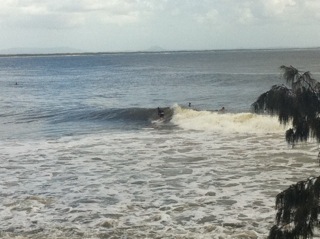
Capped by a ‘Cap’ at Aroma’s at each end, it takes about one hour  return to Dolphin Point. The track skirts along the coastline around a number of bays and through groves of eucalyptus and pockets of rainforest. When the surf is ‘working’ on the points there is the added attraction of muscular surfie dudes and bikini babes along the path, and you can watch them catching the famous right hand breaks.

It is our family philosophy that there is nothing in nature so beautiful that it can’t be improved by a good app. So we used the Noosa walk to test the iPhone app  ‘Kinetic’.

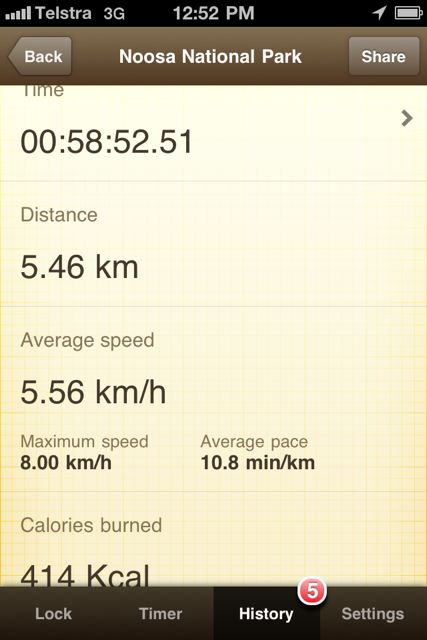
Kinetic uses the acceriometer, compass and GPS system built in to the iPhone to keep track of where you go and what you are doing. It times your activity, tells you how fast you are going, and shows a map of where you are. It records all this information and at the end of your walk it shows you a map of where you have been (Hansel and Gretel, take note). It also records how fast you were going at each stage, and your altitude, so that you can see when you were going up hill.

It is mainly targeted at runners, and includes some training regimes to help you run your next marathon. We had very good success in using it to record our walks, and also to map our routes when we went kayaking. 

The maps can be stored on the Kinetic website and shared via email, facebook or twitter. 
The recording of the Noosa walk is here 

and the map of our kayak through the canals is here

The app can work in the background, which means you can play music or check the web and Kinetic will continue to record your activity. It does eat up battery power, so make sure you start fully charged. It also helps to preserve battery life by turning off Wifi and Bluetooth on the iPhone. The app does access google maps if it can, so if you are overseas (say, in Sri Lanka), make sure your data access is turned off, or you could run up some significant data charges. Also, remember to press the ‘Lock Screen’ button in the app before you put the phone in our pocket, or you may find it accidentally pushes the ‘stop’ button prematurely.

We found that Kinetic worked very well and added value to our activity regime. It is on special for $4.99. There is also a free ‘lite’ version that does nearly everything the full version does – so you can test it out without risk.

Kinetic - Run Walk Cycle… GPS Tracking - Mothership Software Limited

Screenshots of Kinetic below. Back to the track for us.
Img_2038Img_2039Img_2040Img_2041Img_2042

What I Learnt On 21st January in other years

21st January 2016 Have you seen this flyer?
Add a comment
delete

Why do I always seem to pick the wrong line at the Coles checkouts?

I’m into queueing theory, so was very happy to come across this video about Agner Erlang, the father of queueing theory, by Prof Bill Hammack. Prof Hammack is from the University of Illinois. He also goes by the title ‘The Engineer Guy’, http://engineerguy.com.


What I Learnt On 20th January in other years

Add a comment
delete

For many years we have intended to visit the Spirit House Restaurant, at Yandina on the Sunshine Coast.
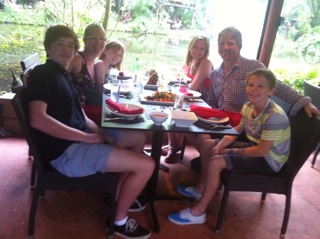
Today we learnt that it was worth waiting for.

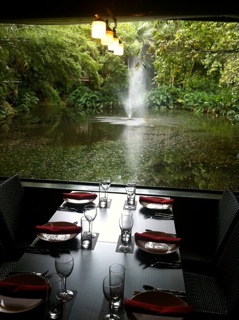
The Spirit House Restaurant was established in 1995 by Helen and Peter Brierty. The buildings are pavilion style, separated by walkways, which all open onto the exquisite tropical garden.

“We wanted to recreate tropical Asia. We created this land from nothing; it was just a very bare paddock when we moved here. We planted every tree, every flower and dug all the ponds,” says the owner, Helen.

As well as the restaurant, there is a popular cooking school on site. Helen and Annette Fear (the original chef) have published a number of cookbooks,. Some recipes from the school are available here.

The menu is innovative, contemporary Thai. The ingredients are delivered daily to the kitchen door by local growers – ginger, lemongrass, tumeric, chillies, kaffir lime are just a few of the Asian ingredients grown in the area.

The ‘signature’ dish is Whole Crispy Fish with Tamarind Chili Sauce. We also had 

Chargrilled Beef Ribs with Sweet Chili Dressing & Orange Mint Salad 
Lemon Grass Curry of Chicken with Kaffir Lime 
Pineapple Fried Rice in Egg Net with Cashews & Vietnamese Mint 
BBQ Tamarind Duck with Ginger Lychee Glaze & Crispy Egg Noodles 
and a Watermelon and Coconut Salad. 

The menu is available here.
http://www.spirithouse.com.au/restaurant/menu

It was a magnificent meal.

I think I’ve previously had two ‘real’ Thai meals – Sailor Thai at the Rocks and Jimmy Liks in Victoria St, Potts Point.
http://www.sailorsthai.com.au/
http://www.jimmyliks.com/

Cathy would also rate Longgrain, in Liittle Bourke St, Melbourne.
http://www.longrain.com.au/

We think the combination of food, atmosphere and setting at the Spirit House topped them all.

PS The Spirit House has an interesting blog at http://www.spirithouse.com.au/funstuff/

Img_1978Img_1981Img_1993Img_1996Img_1998Img_1999Img_2002Img_2018Img_2020Img_2024Img_2030Img_2032

What I Learnt On 19th January in other years

Add a comment
delete

Taking Surf Life Saving Australia’s App ‘Beachsafe’ for a spin.

Img_1941

Tropical Cyclone Zelda brought some big waves to the Sunshine Coast last weekend.
All five points from Noosa (heading east) were ‘working’ with their famous right hand rolling waves.
Each point was packed with hundreds of surfers.

Img_1898

The hot weather, after weeks of rain (and floods), brought thousands to the beaches.
The water rolling in with the big waves had to get out somehow, and so there were rapids sweeps and strong rips.

Lifesavers expected a big weekend, and it was. However, I doubt they were expecting to have to pull a catfish out of a dumped surfer’s back.
http://www.sunshinecoastdaily.com.au/story/2011/01/17/sunshine-coast-beaches-…

There are 12,000 beaches in Australia. Which gets us to the new app created by Surf Lifesaving Australia called Beachsaver.
It uses the nationwide database of all Australia’s surf clubs, and has detailed information on the beaches near where you are, when they are patrolled, the daily weather and surf conditions, and general information about each beach, how hazardous it is, and where to swim.

The app is easy to use, presents relevant information clearly, and is a excellent example of the power of networked databases.

The information in Beach Safety is also available from http://beachsafe.org.au
The app is a free download from the App Store

Beachsafe - Surf Life Saving Australia

Img_2034Img_2035Img_2036Img_2037


What I Learnt On 18th January in other years

View or Add Comment
delete

Red Slurpee (RS) is a complicated molecular compound. It’s main purpose is to stain things.

It was therefore an unequal match when RS was found to have been in contact with a white laminated table in our unit today.

The large red stain was resistant to prolonged vigorous scrubbing and to detergent. Shannon Lush was not returning our call.

Toothpaste

In desperation, we applied toothpaste to the stain. To our surprise, it had an immediate effect and with a little rubbing the table was pristine again.


Toothpaste contains three major ingredients – abrasives, fluoride and detergent. Whitening toothpaste will also contain peroxide. Most of the benefits from teeth cleaning are in fact attributable to the mechanical action of the brush, rather than the paste. Abrasives make up more than 50% of toothpaste, and a number of different agents are used. If you don’t have any toothpaste, salt or baking soda would make a good alternative.

Our Slurpee stain had a good outcome (unless you look at it from the Slurpee point of view). It is possible that salt or baking soda would have been as effective. I’m not game to do a double blind control study to find out.

What I Learnt On 17th January in other years

Add a comment
delete

The Australian company Nearmaps today released high resolution aerial photos of the Brisbane floods. The images were taken from two Cesna aircraft at the height of the flooding last Thursday, and were specially commissioned by the Qld state government and Brisbane council.

Suncorp2

View the maps here

The SMH reports that the CEO of Nearmap, Simon Crowther, commented that “It’s super high resolution and you can zoom in and see a walnut on the ground without it pixelating.” I’m not sure why you would want to look at a walnut, but I see what he means.

As the News tonight details the heroic clean-up efforts, it is sobering to see the extent of the flooding.


What I Learnt On 16th January in other years

16th January 2016 50 Common Misconceptions
Add a comment
delete

Have you ever had an urgent need for swim goggles to find something underwater, but none were available?

No? Well, neither have I. But if I ever do, the technique that Will taught me today will come in handy.

You can see clearly underwater by creating a ‘mask’ with your hands, and using it to trap bubbles of air.

This video by Will and Millie explains all

What I Learnt On 15th January in other years

View or Add Comment
.

Subscribe To WILT

Sign up to our mailing list and receive a once daily dose of What I Learnt Today in your email inbox.

This is the best way to keep up with WILT.

Cheers,

Tony Lembke

You have successfully subscribed to WILT. Thanks.