delete

In case you missed it, this was one of the ten most successful Internet ads for 2010

http://www.youtube.com/user/tippexperience

What I Learnt On 30th January in other years

30th January 2012 23 and a half hours23 and a half hours
Add a comment
delete

“Fellow Australians, it is my melancholy duty to inform you officially, that …Great Britain has declared war upon Germany and that, as a result, Australia is also at war.”

“Well may we say “God save the Queen”, because nothing will save the Governor-General!”

Img_2162

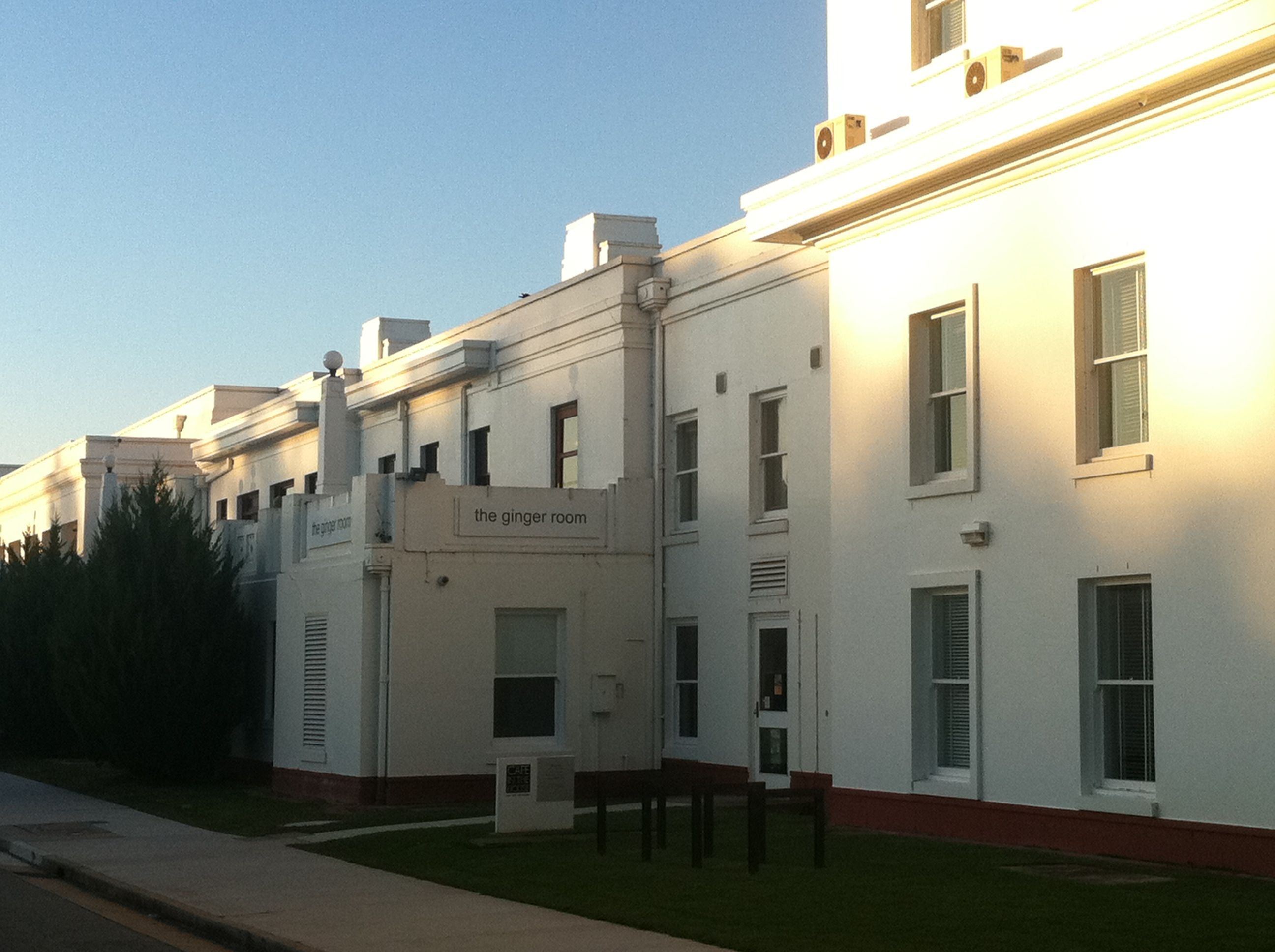
Had dinner tonight in ‘The Ginger Room’, which is in Old Parliament House, Canberra, the site of some of Australia’s greatest (political) battles. The Ginger Room restaurant is in the old member’s dining room, where I imagine Bob Menzies and Gough Whitlam would have acted as the host for many an entertaining dinner.

http://www.gingercatering.com.au/area.asp?aID=25

Img_2160

After Federation in 1901, the Australian Parliament first met in Parliament House, Melbourne, which it borrowed from the Victorian parliament (who moved into the Royal Exhibition Building).

Canberra was selected to be the site of the nation’s new capital in 1908. Walter Burley Smith won a contest to design the new city, and construction began in 1913. Work on Parliament House commenced in 1923. It was designed by John Smith Murdoch, the Commonwealth’s Chief Architect, and intended to be a ‘provisional’ building to house parliament for about 50 years.

The Australian parliament sat in Old Pariament House from 1927 until the new building was opened during the bicentennial celebrations in 1988.

By that time, the building was far too small to host the politicians, staff, public servants and journalists who worked there. Many saw this as an advantage – ministers were always accessible, and it was impossible to keep a secret.

The Aboriginal Tent Embassy was established on the lawns in front of Parliament House in 1972 as a protest against the giovernment’s failure to acknowledge aboriginal land rights. It has been a continuous feature since 1992.

http://www.aboriginaltentembassy.net/

Img_2167

Old Parliament House now serves as the Museum of Australian Democracy

 http://moadoph.gov.au/

Img_2163

A current exhibition is the Best of Australian political cartoons of 2010.

http://moadoph.gov.au/exhibitions/behind-the-lines-the-year-s-best-political-…

Img_2164


Back to the meal –  the Ginger Room is a very formal restaurant, and the service was impeccable.

The food may have been a bit sophisticated for me – I had some trouble identifying the dishes.


Can you work out what the desert in this slideshow is?

Img_2153Img_2171Img_2168Img_2157Img_2156Img_2155

What I Learnt On 29th January in other years

View or Add Comment
delete

Today I learnt that nothing changes much at Sydney University, just as the motto* implies
My daughter Alex enrolled there today, 29 years after I did.

Img_2130

More food outlets, but same food, unfortunately.

Img_2109

Same Marxist Collective, and it appears the exact same people handing out pamphlets.

Img_2127

Same political posters – though now Labor are the baddies!

Img_2126

Img_2125

Same student union functions with the same attraction – cheap beer.

Img_2110

The Jacaranda tree remains remarkably healthy in the main quad – Tradition is that if you haven’t started studying by the time it blooms – you’re too late (Got that, Alex!)

Img_2136

And all paths still lead to Johns College.

Img_2148

I also learnt that you need the very useful SRC Counter Course Handbook **before** you enrol in your subject choices, not afterwards.
http://www.src.usyd.edu.au/sites/default/files/CCHB_2011.pdf


Operation
Artshistory
Journalist

*Sidero Mens Eadem Mutato is the motto of Sydney University- “The constellations change, but the mind is the same” -ie “The traditions of the older universities of the Northern Hemisphere are continued here in the Southern.”

What I Learnt On 28th January in other years

Add a comment

delete
Media_httpthisisindex_ydagm

What I Learnt On 27th January in other years

27th January 2012 New Year PrayerNew Year Prayer
Add a comment
delete

Australia_day

Happy Australia Day, which is a big day round here.

Congratulations to Prof Ron McCallum, announced  today as senior Australian of the Year. Ron is a good friend of our good friend Robyn Fitzgerald, and thus the only Australian of the Year who has previously celebrated Australia Day at our house. He is truly a remarkable fellow. (however, I’m not sure he considers himself ‘senior’)

Ron_mccallum

From http://www.australianoftheyear.org.au/

The Senior Australian of the Year 2011 is equal rights campaigner Professor Ron McCallum AO of Artarmon, NSW. Professor McCallum is the first totally blind person to have been appointed to a full professorship at an Australian university. Professor McCallum was the foundation Professor in Industrial Law at the University of Sydney, and from 2002, he served five years as Dean of Law. He has fervently pursued equal rights for working people across the globe and was the inaugural President of the Australian Labour Law Association from 2001 to 2009. He is currently Chair of Radio for the Print Handicapped of New South Wales Co-operative. The organisation operates radio 2RPH, which reads out newspapers and magazines over the air for blind and other print handicapped listeners. He is also one of two Deputy Chairs of Vision Australia, and one of 12 members of the first monitoring committee for the United Nations Convention on the Rights o Persons with Disabilities. He was appointed inaugural Rapporteur of this committee and is now the Chair. Ron has also recently been appointed to the Federal Government’s National People with Disabilities and Carers Council. Ron is a leading light in the community for people with a disability, working for equality among all Australians.

History of Australia Day

A very edited version of ‘From Celebrating Australia: A History of Australia Day essay’ by Dr Elizabeth Kwan

The tradition of having Australia Day as a national holiday on 26 January is a recent one. Although it has been a public holiday in NSW since 1818, not until 1935 did all the Australian states and territories use that name to mark that date. And it was not until 1994 that they begin to celebrate Australia Day consistently as a public holiday.

The tradition of noticing 26 January began early in the nineteenth century with Sydney almanacs referring to First Landing Day or Foundation Day.  That was the day in 1788 Captain Arthur Phillip, commander of the First Fleet of eleven convict ships from Great Britain and the first governor of New South Wales, arrived at Sydney Cove. The raising of the Union Jack there symbolised British occupation of the eastern half of the continent claimed by Captain James Cook on 22 August in 1770.

Some immigrants who prospered in Sydney, especially those who had been convicts or the sons of convicts, began marking the colony’s beginnings with an anniversary dinner – ‘an emancipist festival’ to celebrate their love of the land they lived in. Governor Lachlan Macquarie, the emancipists’ friend, made the thirtieth anniversary of the day in 1818 a public holiday, thirty guns counting out the years of British civilization, a tradition Macquarie’s successors continued.3

In 1826 at the centre of the anniversary dinner, ‘Australia’ a new word for the continent, entered the list of toasts. The term was recommended in his Voyage to Terra Australis in 1814 by Matthew Flinders, the skilful circumnavigator of the continent in 1801-03, and proposed by Macquarie to a reluctant British government in 1817.

In 1837  the celebration widened with the first Sydney Regatta, the beginning of a new tradition — one which still continues today. Five kinds of races, including one for whale boats, drew crowds to the shore of Sydney Harbour. ‘It was’, the official newspaper, the Sydney Gazette reported, ‘a day entirely devoted to pleasure’. The Regatta became a central feature of Jan 26th celebrations each year – and sporting events have remained a feature of Australia Day celebrations ever since.

The five ‘sister colonies’ had mixed views of celebrating January 26th. In the centenary year of 1888 representatives of each of the five ‘sister colonies’ and New Zealand went to Sydney to celebrate with New South Wales .South Australia’s Advertiser took pains to point out that New South Wales, though ‘senior’, was not ‘the parent colony’ of all the others, which had their own ‘local memories and historic dates’. That day was not ‘in any sense’, it insisted, ‘the anniversary of a common birthday’ because ‘the idea of Australia’ was too closely linked to ‘the unpleasing circumstances of its early occupation’.

After the remarkable political acheivement of Federation in 1901, there was many years of jostling about what was to be the date of Australia Day. The Australian Natives Association (that is, those born in Australia, rather than Aboriginal) was instrumental in lobbying for 26th January to be the national day. It was not until 1935 for the first time that the name of the day and the timing of the celebration were uniform throughout the country.

With the bicentannary approcahing, in 1980 the Federal Government established the National Australian Day Committee, based in Canberra.

The new Committee, set up to help interested groups make future celebrations ‘truly national and Australia-wide’, adopted a fresh approach to Australia Day. Its forum for state representatives in 1980 agreed that 26 January 1788 ‘should be seen as a day of contact, not of conquest…the day which began the fusion of Australians’. The theme, ‘ONE LAND, ONE PEOPLE’, would best reflect ‘the spirit of Australia Day’.

The bicentennial in 1988 for it to be cemented as the “big day out” it now is across the nation. In 1994, the public holiday was moved from ‘a long weekend’ to January 26th itself.

From today’s Australian

No nation should take its good luck for granted, no society should become complacent about its harmony, no community should deny the power of the unexpected to upend settled lives. But equally no nation should forget to salute its citizens, celebrate its achievements and build an identity based on a mature understanding of its history. Have a happy Australia Day.


What I Learnt On 25th January in other years

25th January 2012 Train Travel in JapanTrain Travel in Japan
Add a comment
delete

Jan 25 2011

AppSpin: Zinio

Taking the app Zinio for a spin

Img_0049Img_0050Img_0052

.

New Scientist is an excellent magazine – but very demanding, as it arrives weekly. Despite all good intentions, eventually you are faced with a guilt-provoking pile still ‘wrapped in plastic’.

So now I subscribe through Zinio. It is still hard to keep up, but at least it is about a third as expensive – and less confronting when you have a backlog.

Zinio produces electronic versions of popular magazines. It has an enormous stable of both Australian and International titles, and they are generally available at significant discounts from the printed version. Periodic specials make the prices even more competitive – 12 months of Harpers Bazaar (US edition) for $10!

The magazines are available in your library on the day they are released. The Zinio App is available on Windows, Mac and iPhone, but comes into its own on the iPad. 

The app is a free download. Purchases and subscriptions are made from within the app. Sample issues of some titles are available so you can ‘try before you buy’.

Some magazines are available ‘US only’ or ‘UK only’. However, the app includes a simple selection in Settings to determine which International Store you are shopping from, and by selecting appropriately you can still make the purchase. (see screenshot)

I consider Zinio a must-have iPad app


Zinio Magazine Newsstand & Reader - Zinio LLC

What I Learnt On 25th January in other years

25th January 2012 Train Travel in JapanTrain Travel in Japan
Add a comment
delete

Need some extra time in your day? 

Seconds count. This video shows how to save time by doing many everyday things a bit faster – from folding a shirt to peeling a potato.

What I Learnt On 24th January in other years

Add a comment
delete

Rpm_g_jetsons_300

When Miss Tennant in Grade 4 asked us to write about what life would be like in the year 2000, we took it for granted that we would have flying cars.

Drats.

Scientists are still struggling with cars that drive themselves safely on the ground.

Once upon a time the Gold Coast Motorail would safely take a family and their car from Lismore to Sydney. This turned out to be too sensible and so the service was disbanded.

Engineers at Google have announced that they are working on an automated car, and have actually driven 140,000 miles on Californian roads.

http://googleblog.blogspot.com/2010/10/what-were-driving-at.html

This hands free car gives you more time to look at Google ads. This video shows it in action.

Volvo are working on a ‘road train’. Pull your car into a line of cars, all following one lead truck. While in the line, your car will follow the leader automatically.

I think I would find the Gold Coast Motorail more relaxing.


What I Learnt On 23rd January in other years

Add a comment
.

Subscribe To WILT

Sign up to our mailing list and receive a once daily dose of What I Learnt Today in your email inbox.

This is the best way to keep up with WILT.

Cheers,

Tony Lembke

You have successfully subscribed to WILT. Thanks.